Bruce Nicholson, PhD, Professor and Chair
| Room: | 446 B |
| Phone: | 210-567-3772 |
| Email: | nicholsonb@uthscsa.edu |
| Web Page(s): | |
| Education: | B.Sc.(Hon) Biochemistry, U. Queensland (1976)
Ph.D. Cell Biology, Caltech (1983) |
| Post Doctoral: | 1983-1986: Dept. Chemistry, Caltech |
| Cross Appointments: | Dept. Physiology, UTHSCSA |
| Other Faculty Positions: | 1986-2004: Asst./Assoc./Prof.
Dept. Biological Sciences, University at Buffalo, SUNY.
1996 -pres: Adjunct Professor
Dept. Biological and Chemical Eng., University at Buffalo, SUNY
2004-pres: Prof. and Chair
Dept. Biochemistry, UTHSCSA
2012-pres: Co-director
Center for Innovation in Drug Discovery |
| Awards and Academic Honors: | 1988-92: PEW Scholar
1992-97 AHA Established Investigator
1993-96: Max Planck Prize
2001-05: Editor-in Chief: Cell Communication and Adhesion
2003-05: Member, Faculty of 1000
2003-pres:Member, Council for Canadian Chairs
2008-12: Executive Committee-CTRC
2012-pres:Internal Advisory Board-CTRC
|
Research Interest:
A primary need for all multicellular life forms is the integration of cell behavior, so that the organism can work as a coordinated whole. The most direct, and possibly most ancient, way of achieving this is to open pores between cells in contact that will allow exchanges of ions, nutrients, signaling molecules, and other metabolites, but precludes movement of proteins or large pieces of DNA and RNA that define the unique identity of each cell. These nano-pores, termed gap junctions, are found in all multi-cellular animals, and in man they are comprised of a diverse protein family of 21 members called connexins. Eight distinct human diseases have been linked to defects in connexin genes, including the most common form of hereditary deafness, skin disease, cataracts and demyelination. Connexins have been identified as tumor suppressors of several cancers, including breast, prostate and melanomas, although their expression has also been correlated with the metastatic process.
Our lab is investigating the regulation and permeability properties of different connexin channels, and their structural basis in order to understand the specific pathways that are regulated in disease, and to develop therapeutic tools to intervene. We utilize a variety of techniques in these studies, ranging from molecular biology and scanning mutagenesis, electrophysiological analysis of channel function and biophysical binding studies to cell culture, high resolution, live cell fluorescent imaging, and animal models of cancer. Specific projects and notable recent findings in the lab are:
(1) Each member of this family forms channels with different regulatory properties and unique permeabilities for different metabolites that are adapted for their functions in specific tissues.
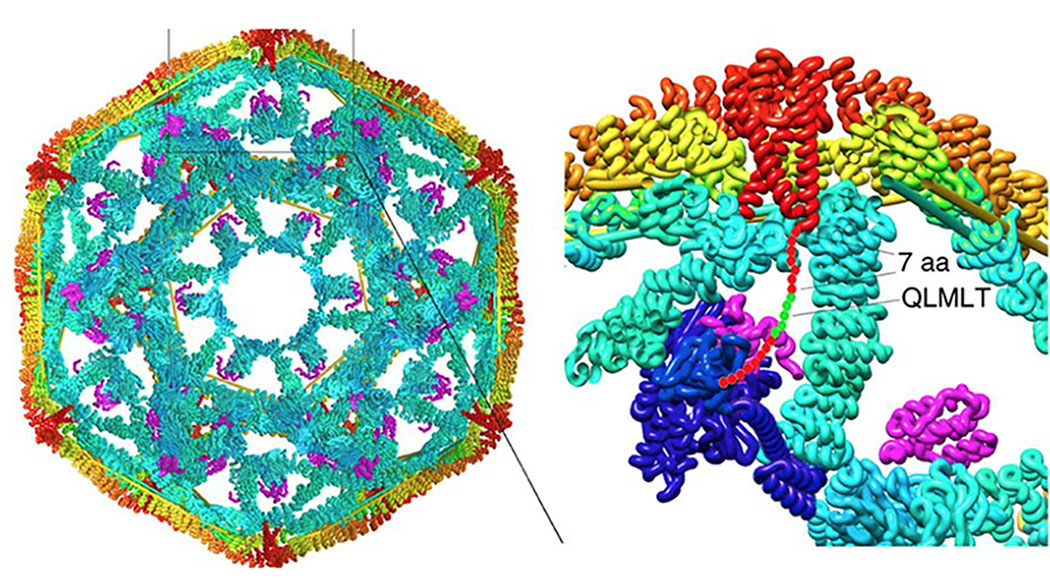
(2) Using cysteine scanning mutagenesis, we have mapped the residues that line the pore, which define channel permeability and found they vary between connexins (Fig. 1).
(3)Using quantitative fluorescent measurements, we have shown that gap junctions represent the major route for transfer of micro RNAs between neighboring cells.
(4)In an in vitro tumor model, we have identified the signaling pathway by which gap junctions can regulate cancer cell growth though the spatial redistribution of cAMP between cells at different stages of the cell cycle (Fig. 2).
(5) Tumor growth suppression by some connexins is prevented by their closure during the cell cycle (Fig 2), and we have been searching for small molecule therapeutics to reverse this process.
(6) Mutations in several connexin genes have been associated with deafness and/or skin disease, depending on the site of the mutation. We have recently shown that some of these mutations cause a loss in the regulation of connexin channels before they dock to form gap junctions, leading to leaky membranes. The nature of the changes to channel gating dictate whether the disease manifests itself in the ear or skin.
 |
 |
| Fig. 1: Systematic mutagenesis to cysteine and testing of their accessibility to reaction with thiol reagents which can block the channel, was used to map the pore lining residues in 2 different connexin gap junction channels, revealing similar patterns i |
Fig. 2: Cx43 channels uncouple during the G2-M phase of the cell cycle, while Cx26 channels do not (as assessed by dye spread from an injected cell to its neighbors). This results in a redistribution of cAMP, and equilibration of PKA levels throughout the |
Selected publications:
- Coregulation of multiple signaling mechanisms in pp60v-Src-induced closure of Cx43 gap junction channels.
Mitra SS, Xu J, Nicholson BJ
J Membr Biol: 2012-08-01; 245(8); 495-506 Epub: 2012-09-11.
PMID: 22965738   LINK:
- The role of connexins in ear and skin physiology - Functional insights from disease-associated mutations.
Xu J, Nicholson BJ
Biochim Biophys Acta: 2012-07-13; (); Epub: 2012-07-13.
PMID: 22796187   LINK:
- Asymmetric configurations and N-terminal rearrangements in connexin26 gap junction channels.
Oshima A, Tani K, Toloue MM, Hiroaki Y, Smock A, Inukai S, Cone A, Nicholson BJ, Sosinsky GE, Fujiyoshi Y
J Mol Biol: 2011-01-21; 405(3); 724-35 Epub: 2010-11-20.
PMID: 21094651   LINK:
- Aquaporin 0 enhances gap junction coupling via its cell adhesion function and interaction with connexin 50.
Liu J, Xu J, Gu S, Nicholson BJ, Jiang JX
J Cell Sci: 2011-01-15; 124(Pt 2); 198-206 Epub: 2010-12-20.
PMID: 21172802   LINK:
- Site-directed mutagenesis reveals putative regions of protein interaction within the transmembrane domains of connexins.
Toloue MM, Woolwine Y, Karcz JA, Kasperek EM, Nicholson BJ, Skerrett IM
Cell Commun Adhes: 2008-05-01; 15(1); 95-105
PMID: 18649182   LINK:
Complete Publication Listing
Lab Associations:
Jesse Ybarra, Research Associate
Post-doctoral:
Edward Kalmykov, PhD, Nicholson Lab
Lab Alumni:
Srikanth Polusani, PhD, Masters Lab