Paul F. Fitzpatrick, PhD, Professor
| Room: | 5.206.4 AHB |
| Phone: | 210-567-8264 |
| Email: | fitzpatrick@biochem.uthscsa.edu |
| Web Page(s): | |
| Education: | BA, Biology, 1975, Harvard University
PhD, Biological Chemistry, 1981, University of Michigan |
| Post Doctoral: | Chemistry, Pennsylvania State University, 1982-1986 |
| Other Faculty Positions: | 2009-present, Department of Biochemistry, UTHSC, San Antonio
1996-2009, Professor, Departments of Biochemistry & Biophysics and of Chemistry, Texas A&M University
1992-1996, Associate Professor, Texas A&M University
1986-1992, Assistant Professor, Texas A&M University
|
| Awards and Academic Honors: | 1991-1996, Established Investigator, American Heart Association
2010, Fellow, American Association for the Advancement of Science |
Research Interest:
The Fitzpatrick laboratory studies the catalytic and regulatory mechanisms of enzymes. We have focused on two classes of enzymes, the tetrahydropterin-dependent aromatic amino acid hydroxylases and the flavoprotein oxidases.
The aromatic amino acid hydroxylases are non-heme iron enzymes critical for proper function of the central nervous system. Phenylalanine hydroxylase in the liver converts excess phenylalanine in the diet to tyrosine; a deficiency in this enzyme results in the genetic disease phenylketonuria. Tyrosine hydroxylase catalyzes the rate-limiting step in the biosynthesis of the catecholamine neurotransmitters, the formation of DOPA from tyrosine. Tryptophan hydroxylase catalyzes the rate-limiting step in the formation of the neurotransmitter serotonin, the formation of 5-hydroxytryptophan from tryptophan. These three enzymes share a common catalytic mechanism in which the electrons from tetrahydrobiopterin and the active site iron are used to activate molecular oxygen. We are using a combination of kinetic, spectroscopic, and structural approaches to understand this reaction and identify intermediates in catalysis. We have obtained direct evidence for a Fe(IV)O hydroxylating intermediate that is capable of both electrophilic aromatic substitution and hydrogen atom abstraction. We are also studying the mechanisms by which interactions between the regulatory and catalytic domains of tyrosine and phenylalanine hydroxylase regulate the activity of these enzymes. Using a combination of structural approaches, we have shown that binding of catecholamines in the active site of tyrosine hydroxylase inhibits the enzyme by stabilizing a form in which the regulatory domain blocks the active site. Phosphorylation of Ser40 in the regulatory domain disrupts the interaction, allowing the inhibitor to diffuse out of the active site. Phenylalanine hydroxylase is allosterically regulated by its own substrate phenylalanine. We are interested in determining the structural basis for activation by phenylalanine and the effects of activation on specific steps in catalysis.
Flavoprotein oxidases and dehydrogenases are being studied to understand the strategies used by enzymes to cleave the unreactive carbon-hydrogen bond. A combination of rapid-reaction kinetics, isotope effects, and structural biology is used to determine structures of intermediates and transition states in the reactions. The results to date are consistent with oxidation of amino acids, alcohols, and hydroxy acids proceeding by hydride transfer, while oxidation of nitroalkanes involves proton transfer. We are extending these studies to amine oxidases and more complex flavoprotein-catalyzed reactions.
 |
 |
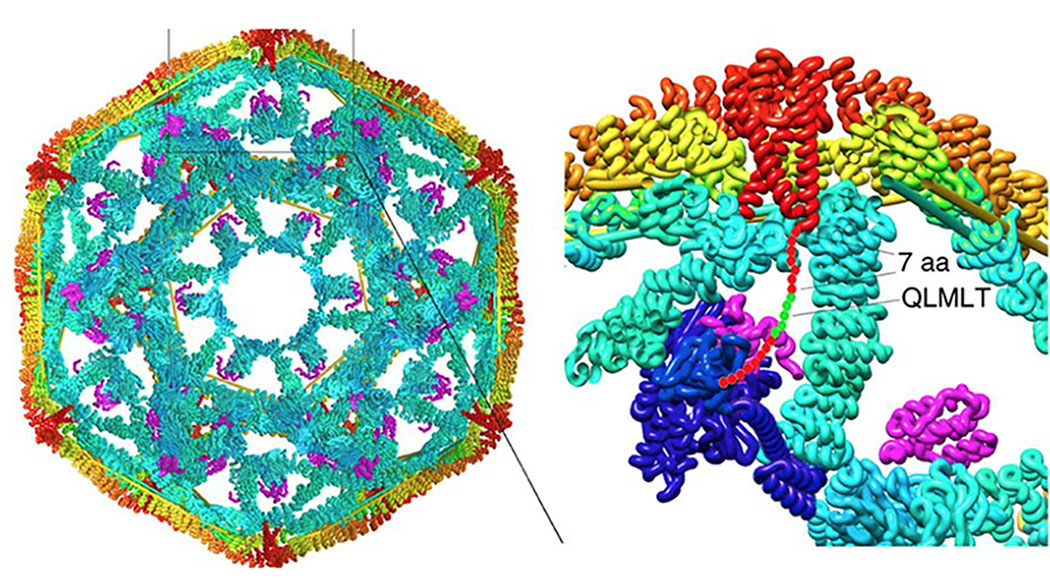
| Location in the structure of the regulatory and catalytic domains of peptides (in red) in wild-type PheH with altered deuterium incorporation kinetics in the presence of phenylalanine. |
Mechanism of aromatic amino acid hydroxylation. |
Selected publications:
- Mutagenesis of a specificity-determining residue in tyrosine hydroxylase establishes that the enzyme is a robust phenylalanine hydroxylase but a fragile tyrosine hydroxylase.
Daubner SC, Avila A, Bailey JO, Barrera D, Bermudez JY, Giles DH, Khan CA, Shaheen N, Thompson JW, Vasquez J, Oxley SP, Fitzpatrick PF
Biochemistry: 2013-02-26; 52(8); 1446-55 Epub: 2013-02-13.
PMID: 23368961   LINK:
- Mechanistic and Structural Analyses of the Roles of Active Site Residues in Yeast Polyamine Oxidase Fms1: Characterization of the N195A and D94N Enzymes.
Adachi MS, Taylor AB, Hart PJ, Fitzpatrick PF
Biochemistry: 2012-10-15; (); Epub: 2012-10-15.
PMID: 23034052   LINK:
- Isotope effects suggest a stepwise mechanism for berberine bridge enzyme.
Gaweska HM, Roberts KM, Fitzpatrick PF
Biochemistry: 2012-09-18; 51(37); 7342-7 Epub: 2012-09-06.
PMID: 22931234   LINK:
- Allosteric regulation of phenylalanine hydroxylase.
Fitzpatrick PF
Arch Biochem Biophys: 2012-03-15; 519(2); 194-201 Epub: 2011-10-07.
PMID: 22005392   LINK:
- Single turnover kinetics of tryptophan hydroxylase: evidence for a new intermediate in the reaction of the aromatic amino acid hydroxylases.
Pavon JA, Eser B, Huynh MT, Fitzpatrick PF
Biochemistry: 2010-09-07; 49(35); 7563-71
PMID: 20687613   LINK:
Complete Publication Listing